
- How a traditional UPS works
- Modern UPS units for the home
- The main limit: short backup time
- A battery that does more
- How UPS mode works
- More than just a UPS
- Working from home needs longer runtime
- One device, many uses
- Longer life, lower long‑term cost
- Key specs for home backup
- Choose a home UPS if …
- Choose a portable power station (with UPS mode) if …
Introduction
Power cuts don't happen every day in the UK, but when they do, they can be a real nuisance – especially if you work from home. A lost video call, unsaved work, or a router that takes minutes to reboot can ruin your morning.
You may have heard of a UPS power supply (uninterruptible power supply). It keeps your computer running during a short outage. But there is another option: a portable power station with a built‑in UPS mode.
This guide explains both, compares them side by side, and helps you choose the right backup for your home.
What Is a UPS Power Supply?
How a traditional UPS works
A UPS sits between your wall socket and your computer or router. When mains power is on, it lets electricity pass through and charges its internal battery. When the power cuts, the UPS switches to battery in milliseconds – so your devices don't notice.
Modern UPS units for the home
Older UPS units were often large and noisy. But modern home‑friendly UPS models are much more compact. A typical desktop UPS is about the size of a thick dictionary and makes only a gentle humming sound – similar to a refrigerator. Many also have silent alerts or near‑silent operation.
The main limit: short backup time
Even the best home UPS is designed to give you minutes of backup – typically 5 to 30 minutes. That is enough to save your work and shut down safely, but not enough to keep working through a longer outage. And it can't power a fridge, nor can you take it camping.
What Is a Portable Power Station with UPS Mode?
A battery that does more
A portable power station is a large rechargeable battery in a carry‑friendly case. You charge it from a wall socket or solar panels, then plug your devices in. No engine, no petrol, no fumes.
How UPS mode works
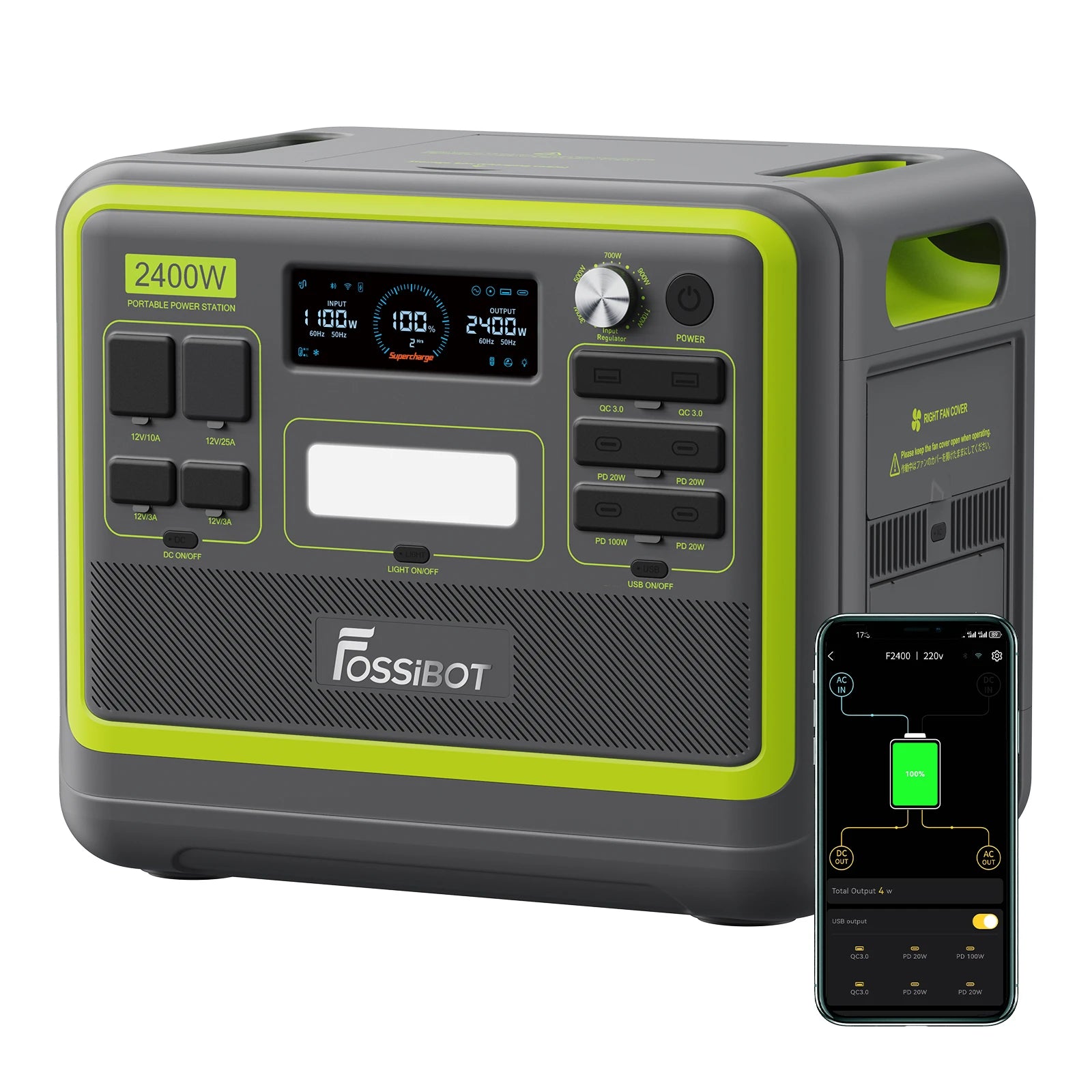
Modern power stations like the FOSSiBOT F2400 include a UPS mode. You leave the station plugged into the wall, and your computer plugged into the station. When mains power fails, the station switches to battery in less than 8 milliseconds – fast enough that your screen doesn't flicker.
More than just a UPS
Unlike a UPS, a portable power station gives you hours or days of backup. It also works as a portable energy source: take it camping, use it in your shed, or keep it in your car for weekend trips. It is quiet, fume‑free, and uses a long‑lasting LiFePO₄ battery.

Comparison – UPS Power Supply vs Portable Power Station
| Feature | Home UPS | Portable Power Station (with UPS Mode) |
|---|---|---|
| Backup duration | 5 – 30 minutes (save & shut down) | Several hours to days (keep working) |
| Typical use | Protect one PC, router, or NAS | Home office + camping + garden office |
| Indoor safety | Safe | Safe (zero emissions) |
| Portability | Compact but stays on desk | Can be carried anywhere |
| Noise level | Low (fridge-like hum or near-silent) | Very quiet (~30dB) |
| Battery lifespan | 2–5 years (often lead-acid) | 10+ years (LiFePO₄) |
| Can power a fridge? | No (not enough capacity) | Yes |
| Can be used outdoors? | No | Yes |
| Upfront cost | £50 – £200 | £400 – £1000+ |
Why a Portable Power Station Is the Modern Choice for Many UK Homes
Working from home needs longer runtime
A home UPS gives you maybe 15 minutes – just enough to save your work and shut down. But many of us want to keep working through a power cut. With a portable power station, you can finish your morning, take your calls, and still have power left.
One device, many uses
A UPS lives on your desk and never moves. A portable power station can do that and come with you:
- Garden office – power your monitor and laptop where there's no mains.
- Camping trips – run a cool box, lights, and charge phones.
- Shed or garage – keep power tools running.
- Car journeys – peace of mind for long trips.
Longer life, lower long‑term cost
Many home UPS units use lead‑acid batteries that wear out after a few years. Replacing them costs nearly as much as a new unit.
Portable power stations use LiFePO₄ batteries. The FOSSiBOT F2400, for example, can be charged over 4000 times while keeping 80% of its original capacity. That is more than 10 years of daily use.
FOSSiBOT F2400 – The 2‑in‑1 UPS Power Supply for Your Home
If you want one device that protects your home office and powers your weekends, the FOSSiBOT F2400 is worth a look.
Key specs for home backup
- UPS mode: <8ms switchover – fast enough for computers, routers, monitors.
- Capacity: 2048Wh – run a home office for 30+ hours, or a fridge for 10–12 hours.
- Output: 2400W continuous / 4800W peak – handles a kettle, microwave, fridge, TV, and power tools.
- Battery: LiFePO₄ with 4000+ cycles (10+ years of daily use).
- Charging: 0–100% in 1.5 hours from a wall socket.
- Pass‑through charging: use it while it recharges – no downtime.
- Ports: 16 outputs including UK three‑pin sockets, USB‑C for laptops, and a car port.
- Warranty: 5 years.
And because it has zero emissions and runs at around 30dB, you can keep it under your desk or in a cupboard without disturbing anyone.
Which One Should You Buy? – A Quick Guide
Choose a home UPS if …
- Your budget is very tight (£50–£150).
- You only need minutes of backup – just enough to save your work and shut down.
- You have one critical device (e.g. a desktop PC, router, or NAS) that must not lose power.
- You never need backup power outside your home.
Choose a portable power station (with UPS mode) if …
- You want to keep working through a power cut – not just save and shut down.
- You need hours or days of runtime for your home office, fridge, or other appliances.
- You want a single device for home backup, camping, garden office, and shed.
- You prefer long‑term value – a 10‑year battery, zero fuel, and minimal maintenance.
- You like the idea of recharging with solar panels for free, clean energy.
Conclusion – The Future of Home Backup Is Here
Home UPS units are still a good choice for very specific, low‑budget needs. They are now smaller and quieter than ever. But for most UK households – especially those with remote workers, garden offices, or a love for the outdoors – a portable power station with built‑in UPS mode is simply more versatile.
The FOSSiBOT F2400 gives you the instant switchover of a professional UPS, the long runtime of a home battery, and the freedom to take power wherever you go. It protects your work during a blackout, powers your weekend camping trip, and keeps your fridge running when winter storms hit.
Why buy two devices when one can do it all?

Frequently Asked Questions (FAQ)
1. Can a portable power station really work as a UPS power supply?
Yes. The FOSSiBOT F2400 has a dedicated UPS mode with <8ms switchover – fast enough for computers, routers, and monitors.
2. How long will it keep my home office running?
A 2048Wh unit like the F2400 can run a laptop (65W) and router (10W) for over 30 hours. A desktop PC and monitor will run for 8–12 hours.
3. Is it safe to use indoors?
Absolutely. It produces zero emissions and uses stable LiFePO₄ battery chemistry. Safe for under‑desk or cupboard use.
4. What's the main difference from a home UPS?
A home UPS gives minutes of backup and stays on your desk. A portable power station gives hours to days of backup and can be used anywhere – home, camping, garden office.
5. What is the best UPS power supply for home office use in the UK?
The FOSSiBOT F2400 offers a true UPS mode, massive 2048Wh capacity, a 10‑year battery, and a 5‑year warranty – a solid choice for UK households.


