
Table of Contents
- Introduction
- Quick Decision Guide
- What Do You Need Electricity for in Your Garden Shed?
- Power Reference Table
- 5 Ways to Power a Garden Shed Without Mains Electricity
- Combining Solar Panels with a Portable Power Station
- How Much Power Do You Need? (With Examples)
- Portable Power Station vs Other Options
- Safety: Using a Power Station in a Garden Shed
- Frequently Asked Questions
- Conclusion
Introduction
A garden shed can be much more than a place to store tools. With the right setup, it can become a small workshop, hobby room, garden office, or a space for charging outdoor equipment. But there is one common problem: how do you get electricity in a garden shed without mains power?
Running a permanent electrical connection from your house can be expensive and complicated, while an extension cable is not always practical. Fortunately, there are several ways to power a garden shed without mains electricity, from battery‑powered lights to solar panels and portable power stations.
In this guide, we will compare the main options, explain how much power you may need, and show why a portable power station can be a flexible solution for an off‑grid garden shed.

Quick Decision Guide
|
If you... |
Best option |
|
Only need occasional light for storage |
Battery‑powered devices |
|
Use the shed occasionally, within 15‑20m of the house |
Extension cable (temporary) |
|
Run power tools daily and need unlimited reliability |
Permanent mains install |
|
Want off‑grid, low‑running‑cost power |
Solar + battery system |
|
Rent, move often, or want a removable setup |
Portable power station |
What Do You Need Electricity for in Your Garden Shed?
Before choosing a power solution, think about what you actually want to run. The electricity requirements of a basic storage shed are very different from those of a workshop.
Lighting – If you only need lighting, your requirements are relatively small. LED lights are an efficient option, consuming around 10‑20W depending on the model.
Charging Phones, Laptops and Other Devices – A garden shed may also be used for charging smartphones, laptops, tablets, speakers, camera batteries, or rechargeable garden equipment. These devices generally have much lower power requirements than power tools.
Running Power Tools – If your shed is also a workshop, your requirements can be considerably higher. You may want to use cordless drill chargers, saws, sanders, grinders, work lights, or other DIY equipment. In this situation, you need to look at both battery capacity (Wh) and output power (W). A power station with plenty of stored energy may still be unable to run a high‑powered tool if its AC output is too low.
Powering Garden Equipment – A shed can also be useful for charging batteries for lawnmowers, trimmers and other garden equipment. Depending on the charger, this can require more power than simply charging a phone or running an LED light.
Power Reference Table
To estimate your total need, use this quick reference:
|
Device |
Typical Power (W) |
Surge / Starting Power |
|
LED work light |
10‑20 |
None |
|
Phone / tablet charger |
5‑15 |
None |
|
Laptop |
45‑65 |
None |
|
Cordless drill charger |
50‑150 |
None |
|
Small fridge (50L) |
60‑100 |
Up to 600W |
|
Circular saw |
1,200‑1,800 |
Up to 2× running |
|
Belt sander |
800‑1,200 |
Up to 1,800W |
|
Water pump |
400‑800 |
Up to 1,200W |
Quick calculation: Add up the wattage of all devices you run simultaneously, multiply by hours of use per day, then add 20‑30% buffer for inverter losses. That gives you the minimum battery capacity (Wh) you need.
5 Ways to Power a Garden Shed Without Mains Electricity
There is no single best solution for every shed. The right option depends on how often you use the shed, what you need to power, and whether you want a permanent or portable setup.
1. Use Battery‑Powered Lights and Devices
The simplest way to get basic electricity in a garden shed is to use rechargeable or battery‑powered equipment, such as rechargeable LED lights and portable USB power banks.
Advantages: Very easy to set up, low initial cost, no wiring required, highly portable.
Disadvantages: Limited battery capacity, requires regular recharging, not suitable for most power tools, may need several separate batteries.
Best for: Storage‑only sheds, occasional visits, seasonal use.
2. Use an Extension Cable from Your House
Run power from your home to the shed using a suitable outdoor extension cable. This can work for occasional use when the shed is relatively close to the house. However, consider cable length, outdoor conditions, protection from damage, and safe cable management.
An extension cable means the shed is still dependent on your home's mains electricity, so it is not a true off‑grid solution. For permanent installations, always seek professional advice.
Best for: Temporary use, sheds within 15‑20 metres of the house.
3. Install a Permanent Mains Connection
If you use your garden shed every day as a workshop, office or hobby room, a permanent electrical connection may make sense. A properly installed mains supply provides reliable electricity and can support higher‑powered equipment.
Considerations: Installation costs, electrical work, planning permissions, permanent wiring, less flexibility if the shed is moved or repurposed.
Best for: Daily workshops, professional home offices, high‑power users.
4. Use Solar Power
Solar power is another way to generate electricity for a shed without connecting it to the mains. A typical off‑grid setup works like this:
Solar Panels → Battery Storage → Electrical Devices
During daylight hours, solar panels generate electricity. A battery stores that energy so you can use it later, including in the evening.
Does Solar Power Work in the UK? Yes, but output varies depending on season, weather, panel orientation, shading and daylight hours. Cloudy weather can reduce generation, so combining solar panels with battery storage is more practical.
Best for: Off‑grid enthusiasts, sheds with good south‑facing roof exposure, long‑term investment.
5. Use a Portable Power Station
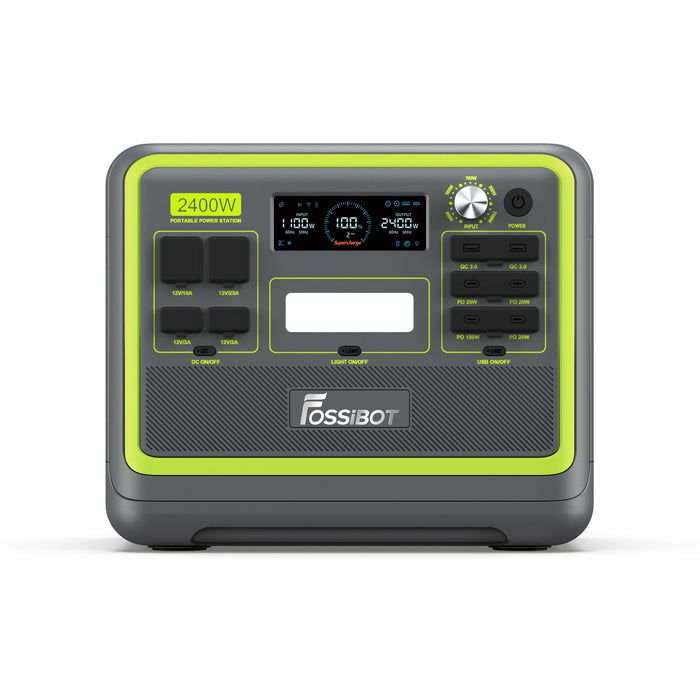
For many homeowners, a portable power station provides a convenient middle ground between a simple battery pack and a permanent mains installation. It contains a rechargeable battery, inverter and multiple charging ports. You can charge it at home, recharge it with compatible solar panels, then take it to your shed and use the stored energy when needed.

Why Use a Portable Power Station in a Garden Shed?
- AC power for electrical equipment
- USB charging for phones and small devices
- Battery storage for use after dark
- Portable power without permanent wiring
- Solar charging with compatible panels
Check the AC Output – Measured in watts (W), this determines how much power the power station can supply at one time. A laptop or LED light requires relatively little power, while a power tool can require considerably more. Make sure the continuous AC output is high enough for your devices, and check for surge capacity if you're running tools with motors.
Check the Battery Capacity – Measured in watt‑hours (Wh), this tells you how much energy the battery can store. A simple way to estimate runtime is:
Runtime ≈ Battery Capacity (Wh) × Efficiency ÷ Device Power (W)
For example, a 1,024Wh power station running a 100W device could theoretically provide around 10 hours of operation before accounting for conversion losses. Actual runtime will vary, so consider both capacity and output power when choosing.
Best for: Flexible users, renters, weekend DIYers, those who want a removable power source.
Combining Solar Panels with a Portable Power Station
Instead of treating solar and power stations as separate options, you can use solar panels to recharge your power station during the day, then draw from it in the evening. This setup is particularly useful if your shed is far from the house and running a cable is inconvenient.
During the day: Solar Panel → Portable Power Station
When you need electricity: Portable Power Station → Shed Devices
This gives you true off‑grid capability, no reliance on extension cables, and the flexibility to move the power station elsewhere when needed. However, solar charging speed depends on available sunlight and the specifications of both the solar panel and power station. In the UK, cloudy or short winter days can significantly reduce solar generation, so having sufficient battery capacity is important.
How Much Power Do You Need? (With Examples)
The answer depends on what you want to run.
Small Shed: Lighting and Charging – If you mainly need LED lights, phone charging and small USB devices, a smaller power station (200‑400Wh) may be sufficient.
Workshop Shed: Power Tools – If you regularly use power tools, pay particular attention to AC output power. A drill, sander or saw can require hundreds of watts. Higher‑powered devices will drain the battery faster.
Off‑Grid Shed: Regular Daily Use – Look for a combination of large battery capacity, high AC output, multiple outputs and solar charging capability.
Example calculation:
- LED light: 15W × 5h = 75Wh
- Laptop: 60W × 3h = 180Wh
- Drill charger: 100W × 1h = 100Wh
Total: 355Wh per day → choose a 500Wh+ power station.
Portable Power Station vs Other Options
|
Power Option |
Installation |
Portable |
Suitable for Tools |
Solar Charging |
Typical Cost |
Best For |
|
Battery‑powered devices |
Very easy |
Excellent |
No |
No |
£20‑£100 |
Basic lighting |
|
Extension cable |
Easy (temporary) |
No |
Yes |
No |
£30‑£80 |
Occasional use |
|
Permanent mains |
Professional |
No |
Yes |
No |
£500‑£2,000+ |
Permanent workshop |
|
Solar + battery |
Moderate |
Depends |
Depends |
Yes |
£300‑£1,500 |
Off‑grid use |
|
Portable power station |
Very easy |
Excellent |
Yes* |
Yes* |
£200‑£1,200 |
Flexible shed power |
*Depending on the power station's output and solar input specifications.
Safety: Using a Power Station in a Garden Shed
A garden shed is not necessarily the same environment as a dry indoor room, so take care when using electrical equipment there.
- Keep It Dry – Protect the power station from rain, leaks, condensation and other moisture.
- Provide Adequate Ventilation – Keep it in a ventilated location and follow the manufacturer's instructions.
- Avoid Excessive Heat – Do not place it next to heaters or direct heat sources.
- Follow the Manufacturer's Instructions – Check operating, charging and storage conditions, especially for long‑term shed storage.
Frequently Asked Questions
Can I power a garden shed without mains electricity?
Yes. Depending on your requirements, you can use battery‑powered devices, an extension cable, solar panels with battery storage, or a portable power station.
What is the cheapest way to get electricity in a shed?
For basic lighting, rechargeable lights and battery‑powered devices are the simplest option. For power tools or multiple devices, a portable power station offers more flexibility.
Will a portable power station run my circular saw?
Yes, provided its continuous AC output exceeds the saw's running wattage and its surge capacity covers the startup spike. Check both the tool's rated power and starting requirements.
Can solar panels power a garden shed in the UK?
Yes, especially when combined with battery storage. Solar generation varies with weather, season and sunlight – size your battery with a buffer.
How long will a power station run my shed devices?
Use: Runtime (h) ≈ Capacity (Wh) × 0.85 ÷ total device wattage. A 1,024Wh unit powering a 100W load gives around 8‑9 hours real‑world runtime.
Can I use a portable power station for a garden office?
Yes, for laptops, monitors, phones, Wi‑Fi and LED lighting. Required capacity depends on how many devices you use and for how long.
Can I leave a power station in the shed over winter?
Check the manufacturer's storage temperature range. Many LiFePO₄ batteries handle sub‑zero temperatures, but performance drops in cold. Store indoors during freezing weather if possible.
Conclusion
Getting electricity in a garden shed without mains power does not necessarily require complicated wiring. For basic lighting, rechargeable devices may be enough. If you only need occasional power, an extension cable can be practical when used appropriately. For a permanent workshop, a professionally installed mains connection may be the most suitable choice.
But if you want flexible, portable and potentially solar‑powered electricity, a portable power station offers an attractive alternative. With the right combination of battery capacity, AC output and solar charging, you can turn an ordinary garden shed into a useful workshop, hobby space or garden office – without permanently connecting it to the mains.
Ready to choose your shed power setup?
[Browse our range of portable power stations →]


